Your customers don't buy the way you sell. Why are you measuring it as if they do?
You track leads generated, deals closed, repeat purchases. Yet you still miss growth targets — do you track the progress your customers are trying to make? That gap is where your revenue stalled.

Good product. Stalled revenue. Sound familiar?
You've built something customers genuinely value. But growth has stalled, and the things you've tried aren't sticking.
You're still the one closing deals
You know it doesn't scale. You've tried to hand it off. But nobody else seems to close the way you do — and you can't explain why.
Your best people can't explain what they do differently
Your top performer closes deals others can't. When you ask how, you get instinct, not process. And you can't figure out how to bottle it.
Every new approach works — for about a quarter
You change your pitch, invest in a new approach, hire someone with a plan. There's a bump. Then it flattens. You try the next thing. Same pattern.
Your best customers found you — you don't know how to find more of them
The customers who love your product figured it out on their own. You didn't orchestrate that. Now you need to — and you realize you don't know what actually made them buy.
You track what your team does — not what your customer goes through
Proposals sent. Follow-ups made. Forecast updated. You know exactly what your team did. You have no idea what the customer went through to decide.
Everyone says use AI — but point it at what, exactly?
You keep hearing AI will transform your business. But automate what, exactly? If you don't know why customers buy, AI just helps you guess faster.
Traditional GTM is supply-side. Your customers live on the demand side.
Funnels, AARRR, pipeline stages — they all describe what the business wants to happen. The Story of Revenue framework describes what the customer is actually experiencing, and structures both measurement and operations around that reality.
This isn't a rebrand of existing thinking. It's a fundamentally different orientation — grounded in Jobs-to-be-Done theory and decades of demand-side economics research.
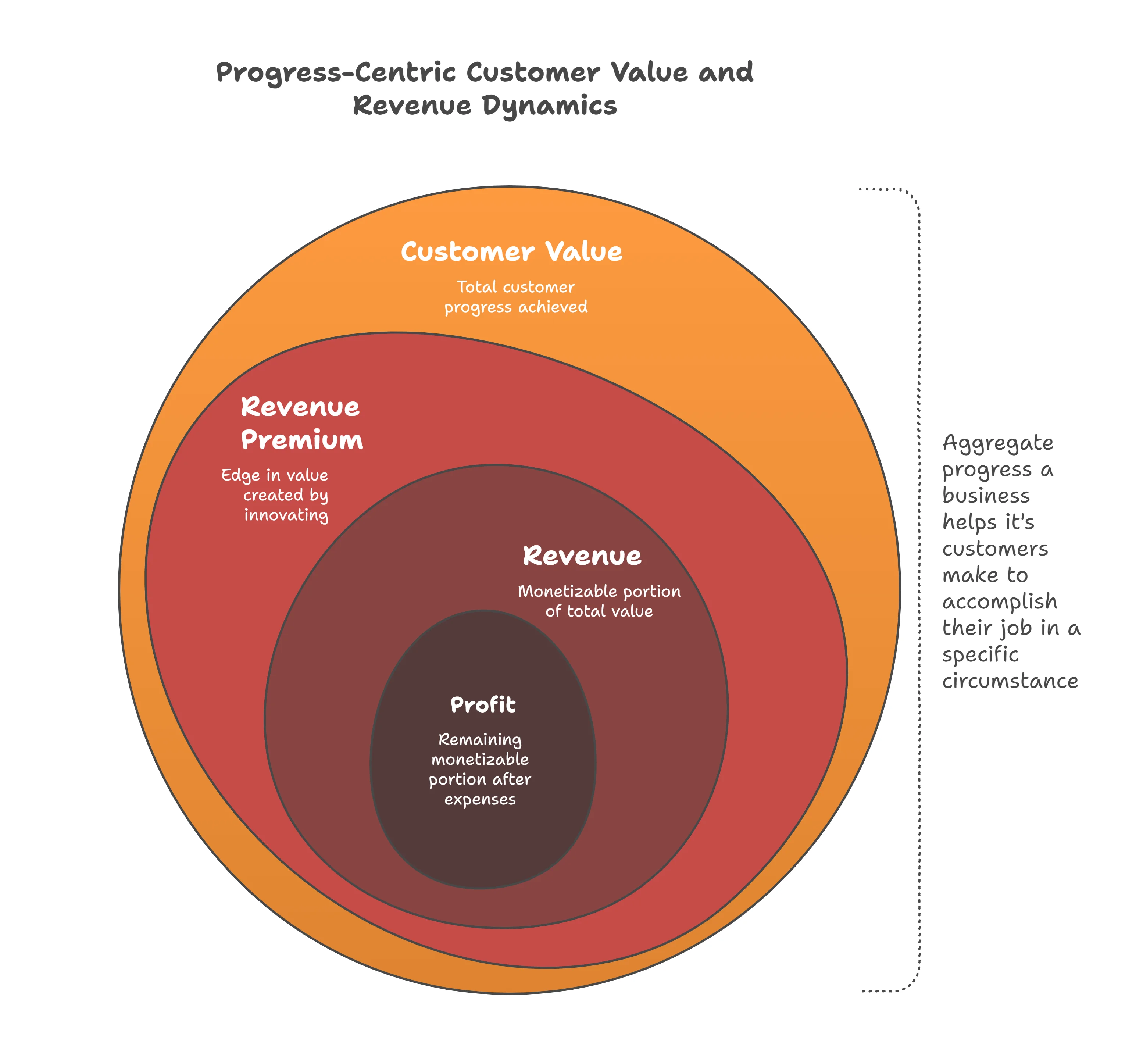 Click to enlarge
 Two sides. Seven stages. One system.
Every market has a demand side and a supply side. The Story of Revenue maps both — and connects them.
The Customer Job Progress Timeline
What your customer actually experiences — from first thought to ongoing progress. A "progress-making process."
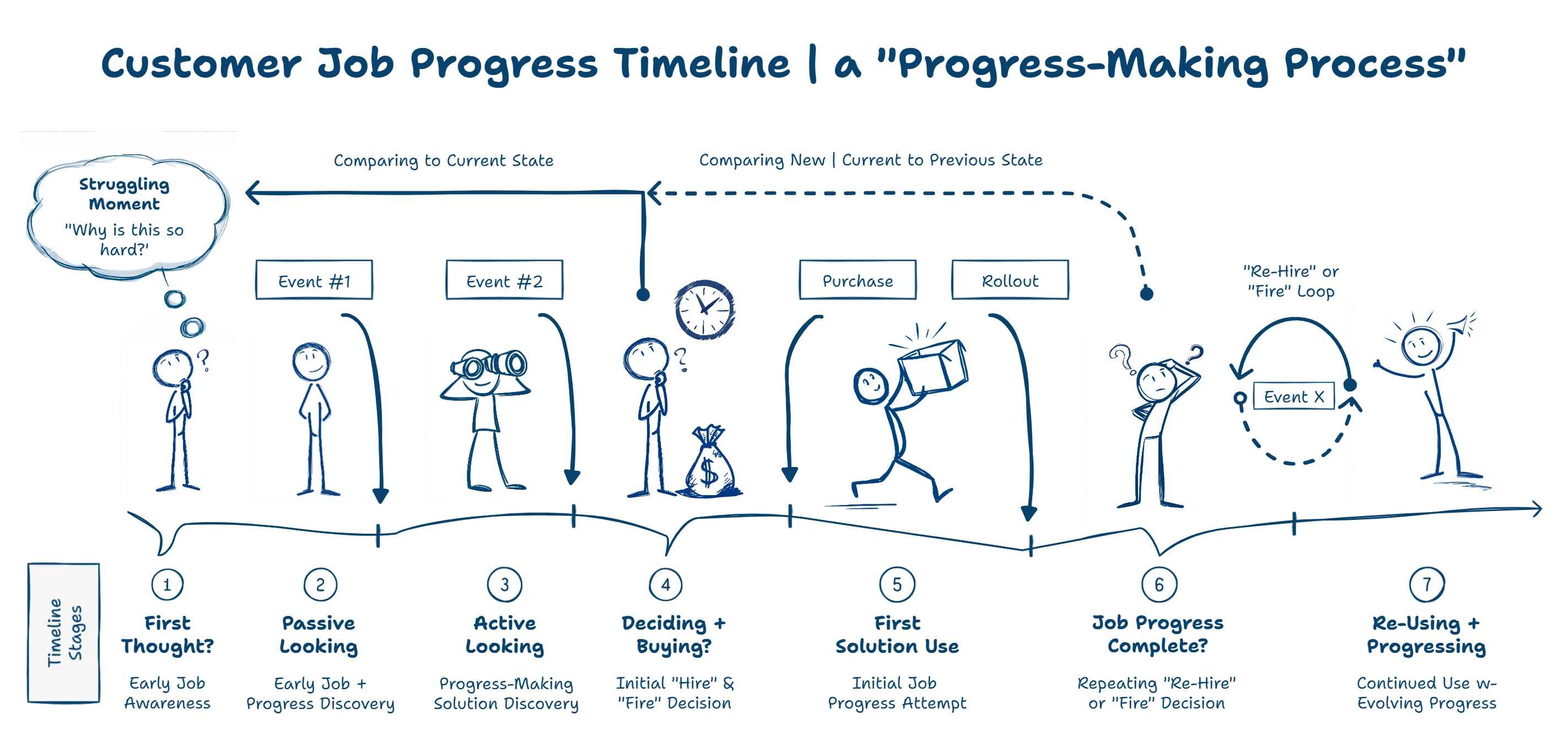 Click to enlarge
 The Company Job Progress Factory
How your company supports customer progress at every stage. A "customer-making process."
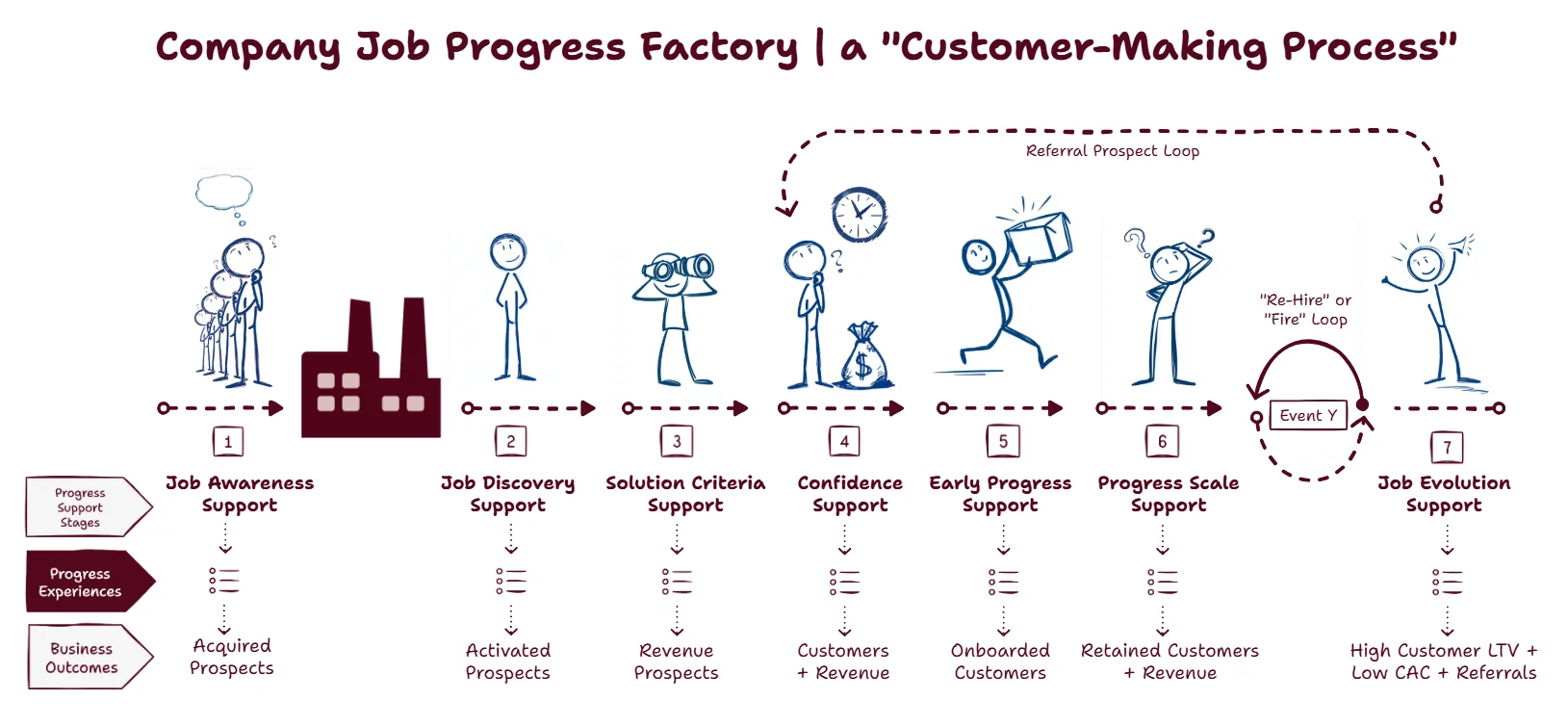 Click to enlarge
 | Stage | Customer Job Progress Timeline | Company Job Progress Factory |
|---|---|---|
| 1 | First Thought? | Job Awareness Support |
| 2 | Passive Looking | Job Discovery Support |
| 3 | Active Looking | Solution Criteria Support |
| 4 | Deciding + Buying? | Confidence Support |
| 5 | First Solution Use | Early Progress Support |
| 6 | Job Complete? | Progress Scale Support |
| 7 | Re-Using + Progressing | Job Evolution Support |
A phased approach. Standalone value at every step.
Each phase delivers something you can use — even if you stop there. Phase 1 earns Phase 2. Phase 2 builds self-sufficiency.
Revenue Diagnostic
3-4 weeksStructured customer job discovery, Four Forces diagnosis, and Customer Job Progress Timeline mapping. You'll see what your current GTM approach is missing — backed by evidence.
Framework + System Build
8-12 weeksFull framework instantiation for your business. AI-powered content production system your team can operate independently. Measurement infrastructure that tracks customer progress, not just your activities.
Progress Optimization
Ongoing, quarterlyEvidence-based optimization. Quarterly reviews of Stage Gains and Stage Drops. Framework refinement as you gather real Customer Outcome Evidence.
Growth-stage B2B companies with a product customers value — and revenue that doesn't match.
- $3M-$50M in revenue with 20-250 employees
- Founder/CEO still touches revenue decisions
- Product customers genuinely value — you have proof
- Growth has stalled despite the product being good
This is not for companies that need:
- Marketing execution (ad buying, social media management)
- A quick fix or growth hack
- Help finding product-market fit (you need to have it already)

Your revenue has a story. Let's find out what it's really saying.
If your growth doesn't match your product quality, there's a reason. Let's talk about what your customers are actually experiencing — and what to do about it.
Prefer email? hello@storyofrevenue.io